What If Organelles Weren’t Just Bystanders DURING INFECTION?
Cells are highly organized systems, with organelles acting as specialized hubs that coordinate metabolism and signaling. However, during infection these structures are often viewed as passive targets, hijacked, damaged, or disrupted by invading pathogens.
But what if that picture is incomplete?
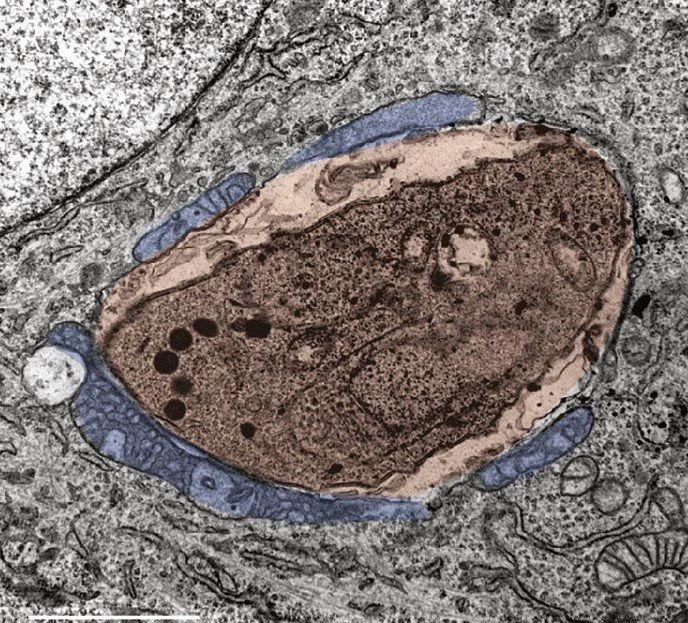
Research in our lab challenges this conventional view: we study organelles as active participants in host defense, asking how mitochondria and other organelles sense infection, communicate with one another, and coordinate cellular responses to invading microbes.
Our work reveals that infection triggers dynamic rewiring of metabolism and organellar function across the cell. We aim to uncover how these responses are organized across space and time, how different organelles contribute distinct yet integrated defense programs, and how pathogens attempt to subvert these processes.
By uncovering new principles of organellar communication and metabolic regulation during infection, our research seeks to broaden our understanding of host–pathogen interactions and reveal how human metabolism shapes the progression of infectious disease.