New preprint Alert: Social Exposure Primes Immunity

We are excited to share our latest preprint from our postdoc Wilson, Temitope Ademolue, now available on bioRxiv, which uncovers a previously unrecognized form of immune regulation in mammals driven by social exposure.

Social sensing of infection reprograms peripheral immunity in healthy mice.

In the study, Wilson and Lena asks whether mammals, like plants and insects, can mount protective immune responses based on exposure to infected neighbors. Using a mouse co-housing model, the they show that healthy mice living alongside conspecifics infected with the non-communicable parasite Toxoplasma gondii undergo a significant shift in peripheral immune responses — despite never being infected themselves!

This exposure to infected cage-mates establishes a primed immune state that enhances physiological resilience. Notably, exposed mice were better protected against a subsequent sublethal lipopolysaccharide (LPS) inflammatory challenge. Mechanistically, this protection was mediated by increased IL-10 production from myeloid cells. Blocking IL-10 signaling eliminated the exposure-induced protection, demonstrating a key role for this anti-inflammatory pathway.

Together, these findings reveal that immune responses in healthy mammals can be shaped by social exposure to infected individuals, pointing to a form of social immunity previously thought to be restricted to plants and invertebrates. This work opens new avenues for understanding how social environments influence immune homeostasis and disease resilience.

📄 Read the preprint:
https://www.biorxiv.org/content/10.64898/2026.01.28.702380v1

Please join us in congratulating Wilson on this exciting new work and in sharing this study with colleagues!

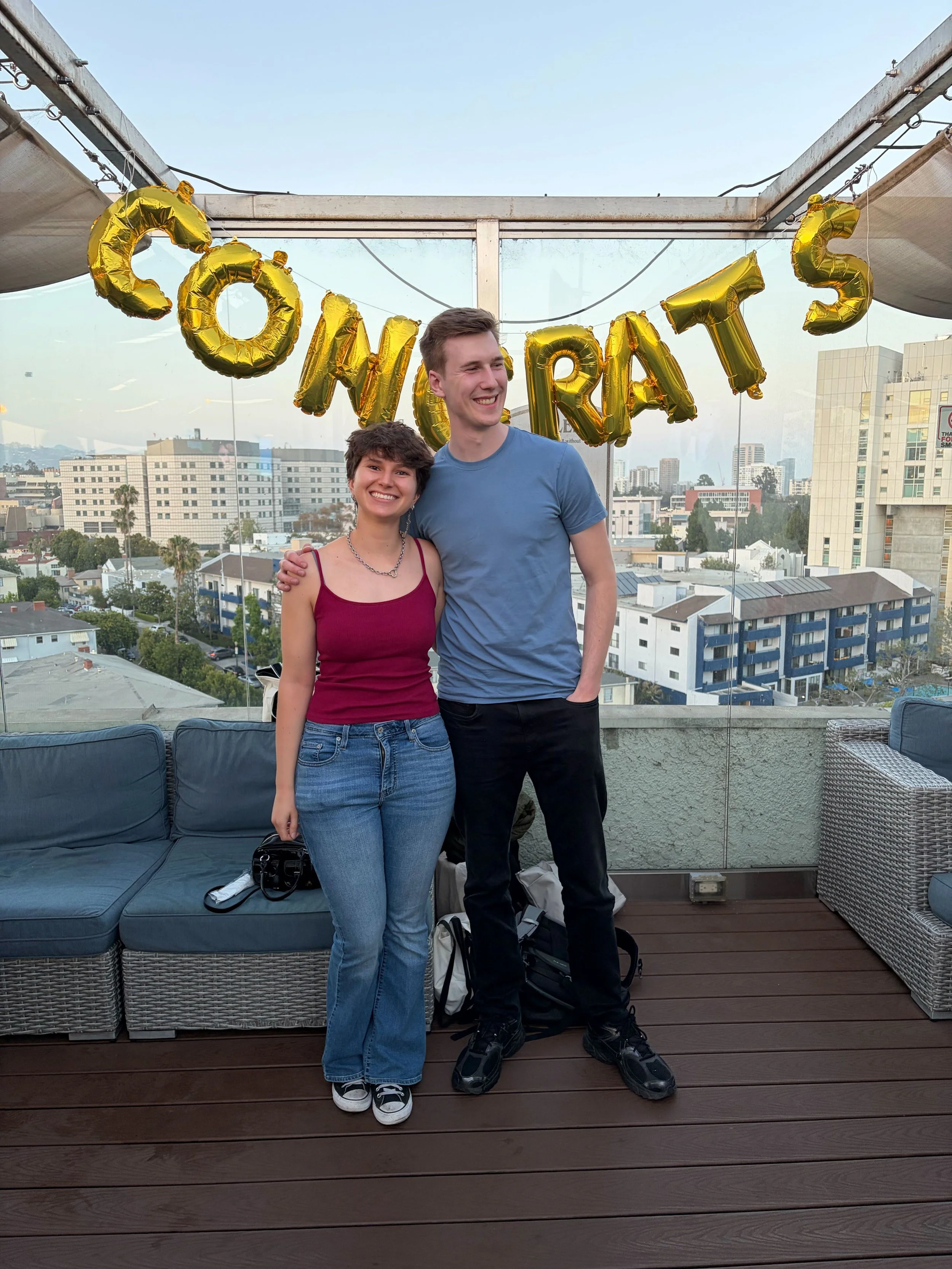
🎉 Congratulations to Lena on Receiving Tenure at UCLA!

We are thrilled to announce that Lena, our Principal Investigator, has officially been awarded tenure at UCLA.

Tenure is a major milestone in an academic career and reflects sustained excellence in research, teaching, and service, as well as a strong commitment to advancing the university’s mission. This achievement recognizes Lena’s impactful scientific contributions, leadership, and dedication to mentoring trainees and building a collaborative research environment.

Receiving tenure secures Lena’s long-term position at UCLA and provides the academic freedom to continue pursuing innovative and ambitious research directions. For our lab, this milestone marks an exciting moment of stability and growth as we look ahead to new discoveries, collaborations, and opportunities.

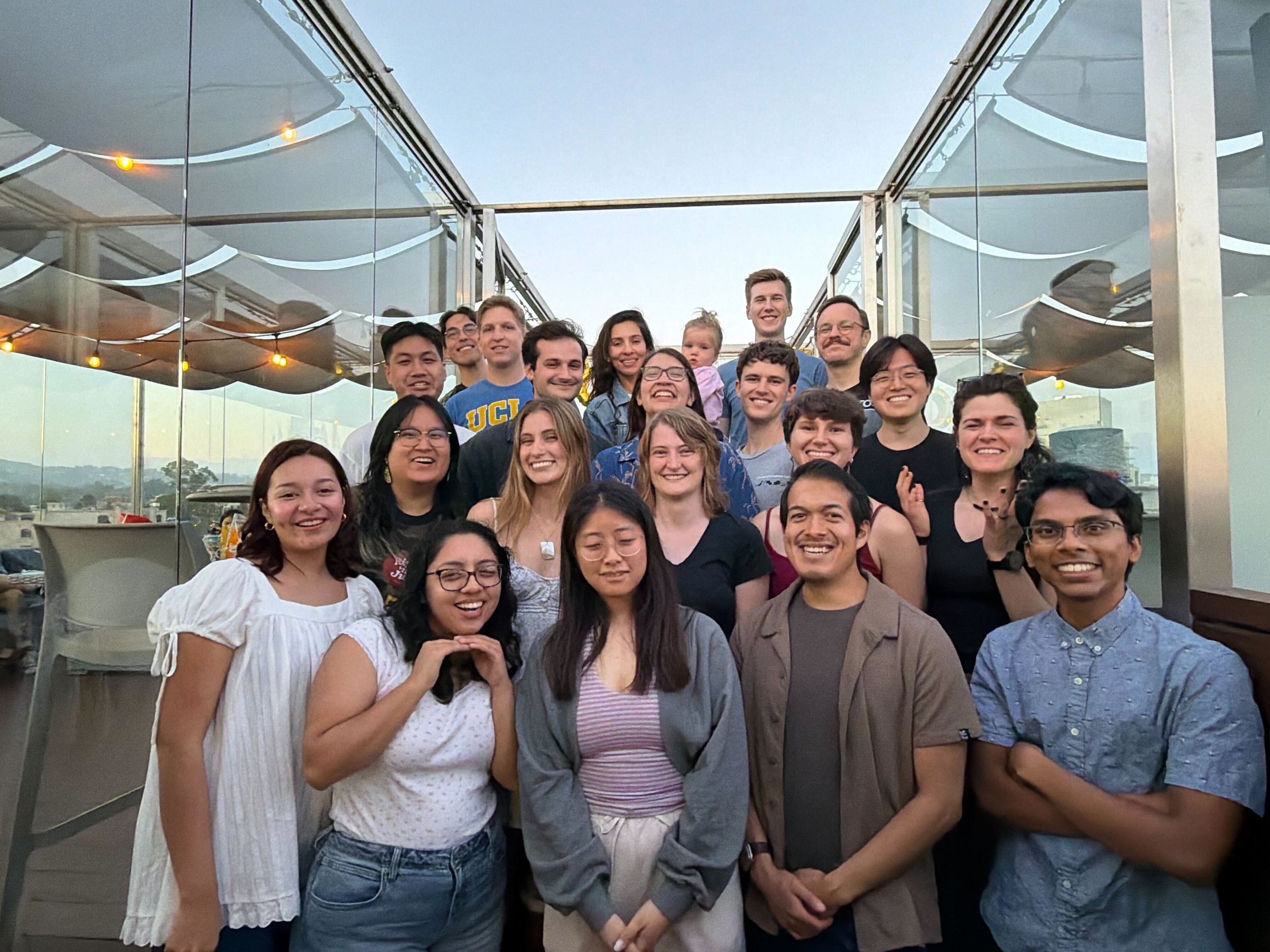
Please join us in congratulating Lena on this well-deserved accomplishment — we are proud to be part of her lab and excited for what’s to come! 🎓✨

Research Highlight: Chahat’s Work Featured in Trends in Parasitology!

A recent highlight of Chahat’s work has been published in Trends in Parasitology, showcasing new insights into how Toxoplasma gondii interfaces with host cell organelles to support intracellular survival.

The article discusses recent studies by Chahat Mehra et al. and Romano et al., revealing that T. gondii actively connects its parasitophorous vacuole (PV) to the host endoplasmic reticulum (ER). Rather than disrupting vacuolar integrity, the parasite employs a secretory relay involving dense granule and rhoptry effectors to establish specialized membrane contact sites between the PV and the ER.

These contact sites allow T. gondii to access host-derived metabolites while maintaining the protective barrier of the parasitophorous vacuole — a strategy that highlights the parasite’s remarkable ability to remodel host cell architecture for its own benefit. This work advances our understanding of host–pathogen interactions and identifies new conceptual frameworks for studying metabolic exchange during intracellular infection.

We congratulate Chahat on this impactful contribution to the field and on having this work featured in Trends in Parasitology, a leading journal in parasitology research!

Congratulations to Christian — Selected for Poster Presentation at the National Collegiate Research Conference!

We are thrilled to announce that Christian has been selected to present a poster at the National Collegiate Research Conference (NCRC), to be held in January 2026 at Harvard University!

NCRC is the largest student-run undergraduate research conference in the United States, bringing together hundreds of talented student researchers from over 100 universities around the world. The conference provides a platform for undergraduate students across disciplines — including the natural sciences, social sciences, engineering, and humanities — to share their research, engage with peers and mentors, and participate in a vibrant community of young scholars.

We are incredibly proud of Christian’s scientific accomplishments and excitement for the opportunities this experience will bring. Presenting at NCRC is not only a chance to highlight his work but also to contribute to a national conversation on cutting-edge research and interdisciplinary inquiry.

Please join us in congratulating Christian on this outstanding achievement! 🎓👏

Lena is Accepted as a Member of the UCLA Jonsson Comprehensive Cancer Center (JCCC)

We are delighted to announce that Lena, has been accepted as a member of the UCLA Jonsson Comprehensive Cancer Center (JCCC).

The JCCC is an NCI-designated comprehensive cancer center and a highly collaborative research community that brings together investigators with a strong and sustained commitment to cancer research. Membership is granted through a competitive review process and recognizes investigators with impactful cancer-focused research programs, strong publication records, and active engagement in advancing cancer science and patient care.

As a JCCC member, Lena joins a multidisciplinary network of cancer researchers across UCLA and partner institutions, with access to JCCC shared resources, collaborative research programs, and cancer-focused scientific initiatives. Membership also reflects a commitment to contributing to the JCCC mission through research excellence, training, and service to the broader cancer research community.

This milestone recognizes Lena’s leadership and the lab’s growing contributions to immunity and cancer research. We look forward to the new collaborative opportunities this affiliation will bring and to continuing to advance our work within the JCCC community.

Please join us in congratulating Lena on this achievement!

Tim wins the Asrican Sophie & Jack Award

We are thrilled to announce that our PhD candidate, Tim, has been selected as a recipient of the Asrican Sophie & Jack Award from the UCLA Graduate Programs in Bioscience! This prestigious award supports PhD students conducting innovative research in cardiovascular science, spanning basic discovery to translational clinical applications, and recognizes dedication, creativity, and impactful contributions to the field.

Tim’s accomplishment not only reflects his outstanding scientific work, but also highlights the excellence of the research taking place in the Pernas Lab. Please join us in congratulating Tim on this well-deserved honor — we can’t wait to see where his work leads next!

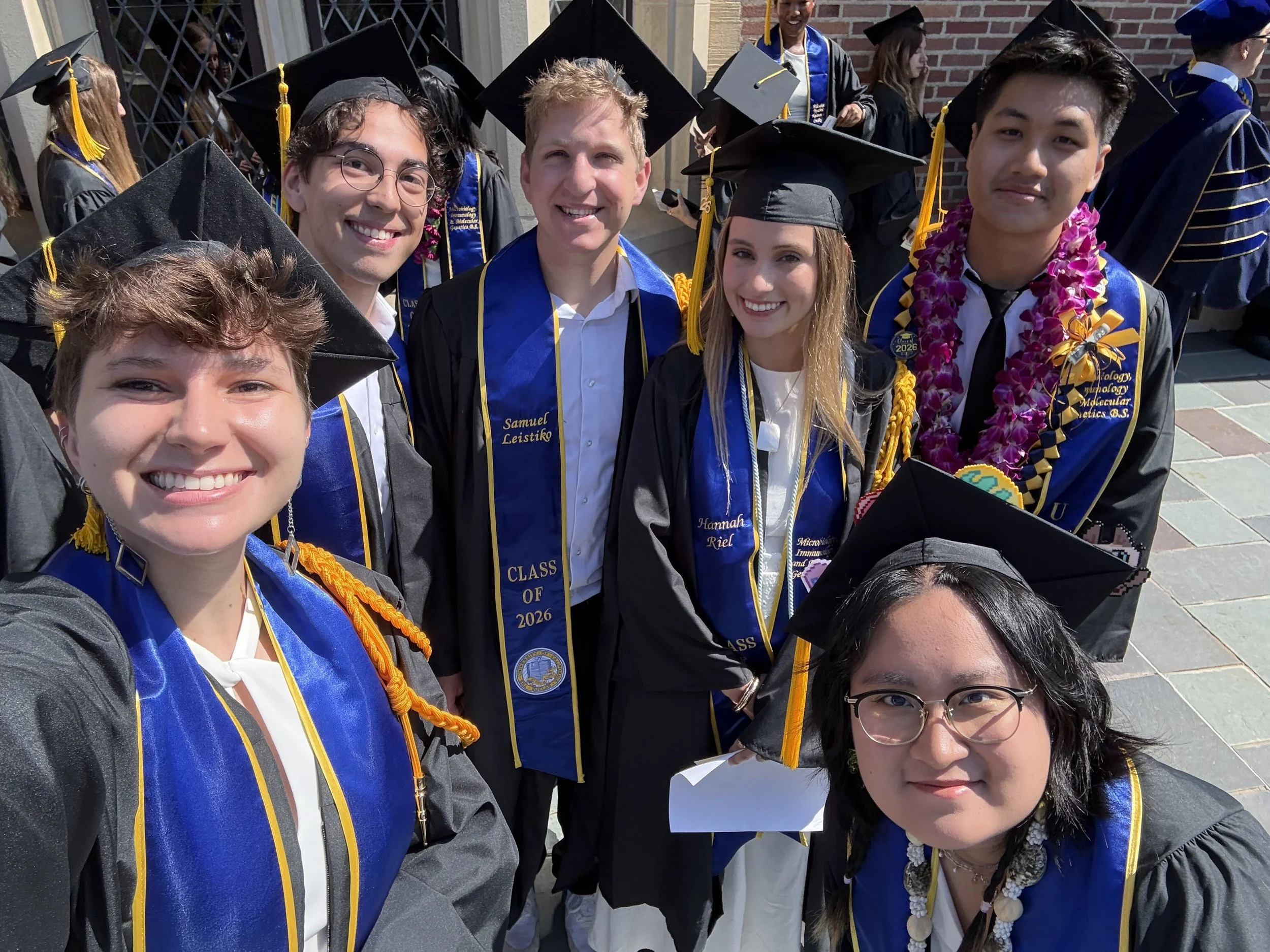
Hannah and Sam got into the MIMG Path2 program!

We’re excited to announce that two of our undergraduate students, Hanna Riel and Sam Leistiko, have been accepted into UCLA’s MIMG Path-2 Program — a prestigious track that allows qualified undergraduates to carry out independent research under faculty mentorship while fulfilling their major’s research requirement.

Having two students join Path-2 is a win for our lab as well as for them. It means having dedicated, motivated undergraduates working more intensively and independently on meaningful projects, contribution to long-term research goals, with potential for poster presentations or co-authorship and of course extra hands for more continuity and focus on ongoing or new investigations.

Please join us in congratulating them on this achievement! We look forward to their growth and contributions in the lab under the Path-2 program.

🌟 Student Spotlight — Christian Aguirre

We’re proud to highlight Christian Aguirre, a fourth-year Microbiology, Immunology, and Molecular Genetics major, whose undergraduate research journey was recently featured by the UCLA Undergraduate Research Center—Sciences!

Christian first connected with our lab after transferring to UCLA from community college and seeking research experience. He reached out to faculty, ultimately joining the Pernas Lab in October 2024 and quickly began learning essential laboratory skills. Christian’s independent project focuses on understanding how the protein glutathione peroxidase 4 (GPX4) influences Toxoplasma gondii’s growth — exploring the role of lipid peroxides and ferroptosis mechanisms during infection.

Reflecting on his experience, Christian describes undergraduate research as “enriching, fun, and a once-in-a-lifetime opportunity.” He emphasizes the supportive lab environment and credits his time in research with strengthening his desire to become a physician-scientist.

Christian also recently presented his work orally at the ABRCMS Conference, hosted by the American Society for Microbiology, marking a major step in his scientific communication and professional development. He prepared by practicing with lab members, polishing his slides with mentor feedback, and engaging deeply with the literature — all of which helped him make the most of the conference experience.

His story is a great example of how UCLA’s research opportunities and community support can empower students to grow as scientists and leaders. Please join us in congratulating Christian on his accomplishments and in celebrating his contributions to our lab and the broader research community! 🎉

Chahat’s PhD work got published in Nature Microbiology!

We are thrilled to announce that the amazong work of Chahat Mehra, a PhD student in the Pernas Lab, has just published in Nature Microbiology: Toxoplasma effector TgROP1 establishes membrane contact sites with the endoplasmic reticulum during infection.

Using a clever combination of a fluorescence-based membrane-contact reporter, CRISPR loss-of-function screening, imaging and proteomics, Chahat and her coauthors discovered that the parasite effector TgROP1 acts as a molecular tether — connecting the host endoplasmic reticulum (ER) to the intracellular vacuole that contains Toxoplasma gondii.
This ER–parasite membrane contact site (MCS) provides a novel insight into how pathogens hijack host organelle interactions, and opens new avenues to understand infection biology — and potentially design therapies targeting these contact-site tethers.
Getting published in Nature Microbiology is a major milestone and reflects the rigor, creativity, and persistence behind the work.

Please join me in congratulating Chahat for this outstanding achievement! We look forward to seeing where this work leads and celebrating many more milestones together.

Sebastian Presents at SCEP 2025

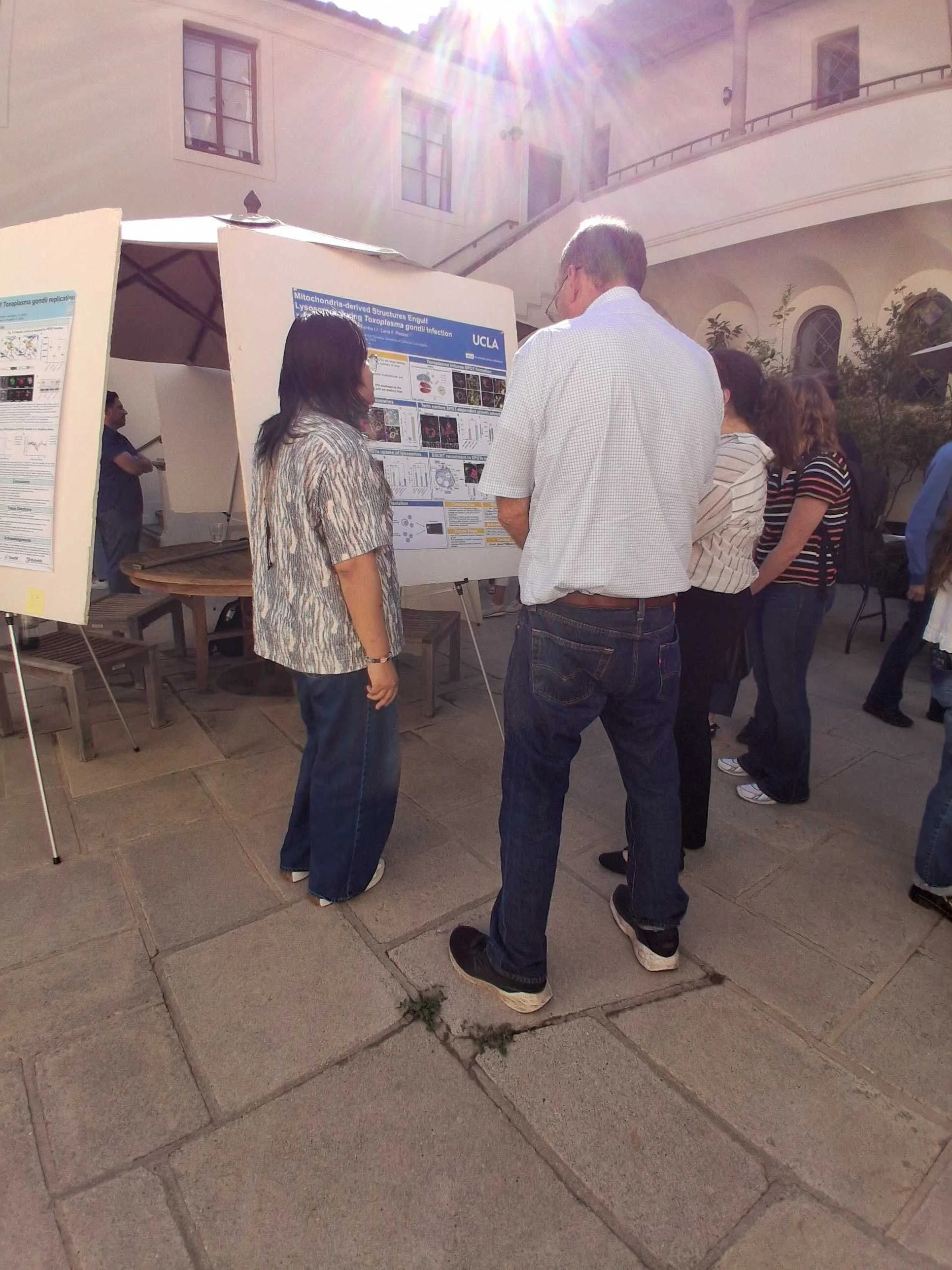
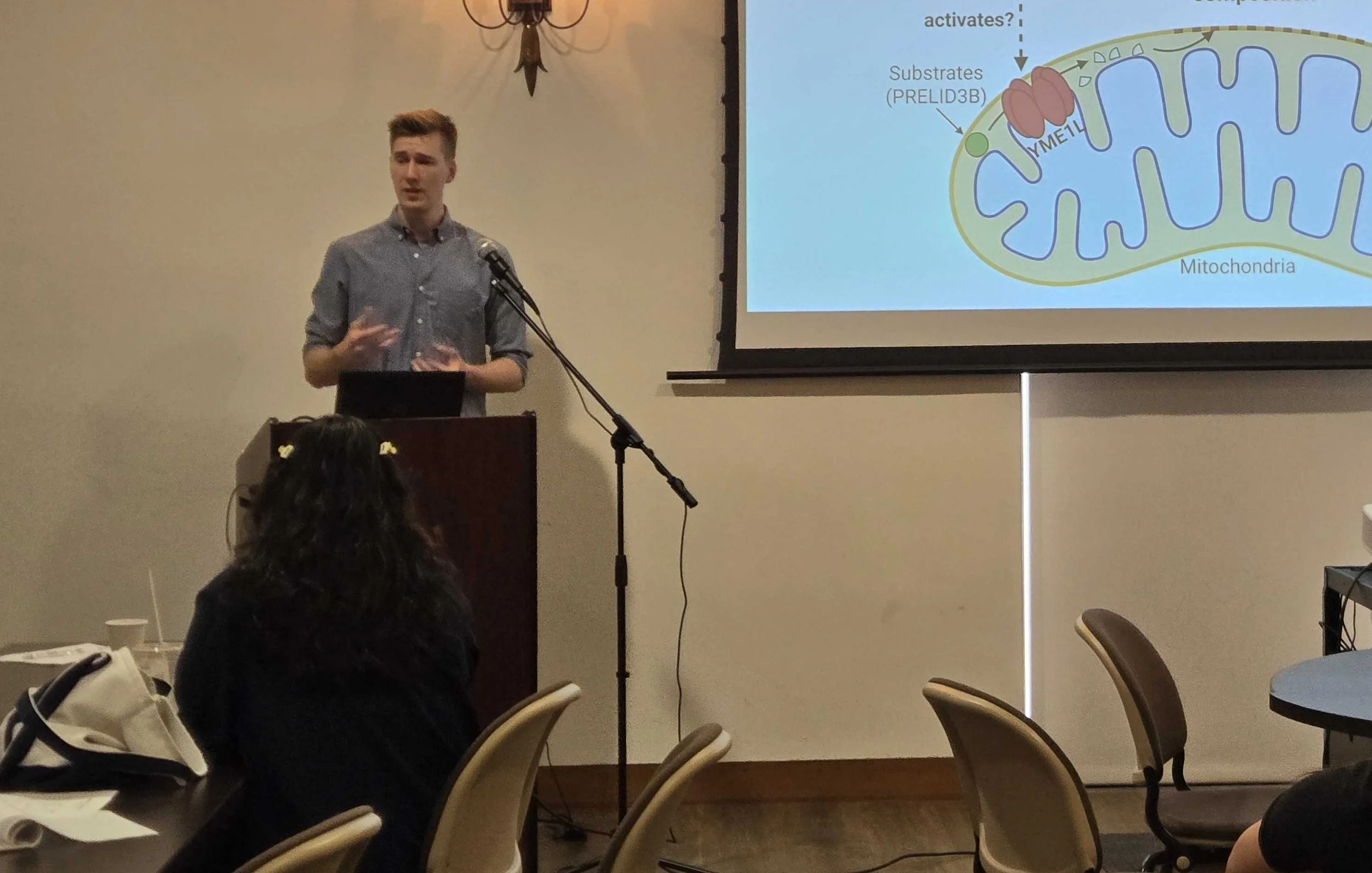
We’re excited to share that Sebastian gave an excellent talk about how “Molecular mimicry enables mitochondria-Toxoplasma contact sites (MiToCs)” at the 2025 SCEP Symposium! The SCEP Symposium (Southern California Eukaryotic Pathogen Symposium) brings together scientists, trainees, and students from across the field to share cutting-edge research, build collaborations, and explore the latest advances in pathogen biology and host–pathogen interactions.

Congratulations to Sebastian for representing the Pernas Lab and for presenting his work at this important scientific meeting — we’re proud of your achievement and look forward to what’s next!

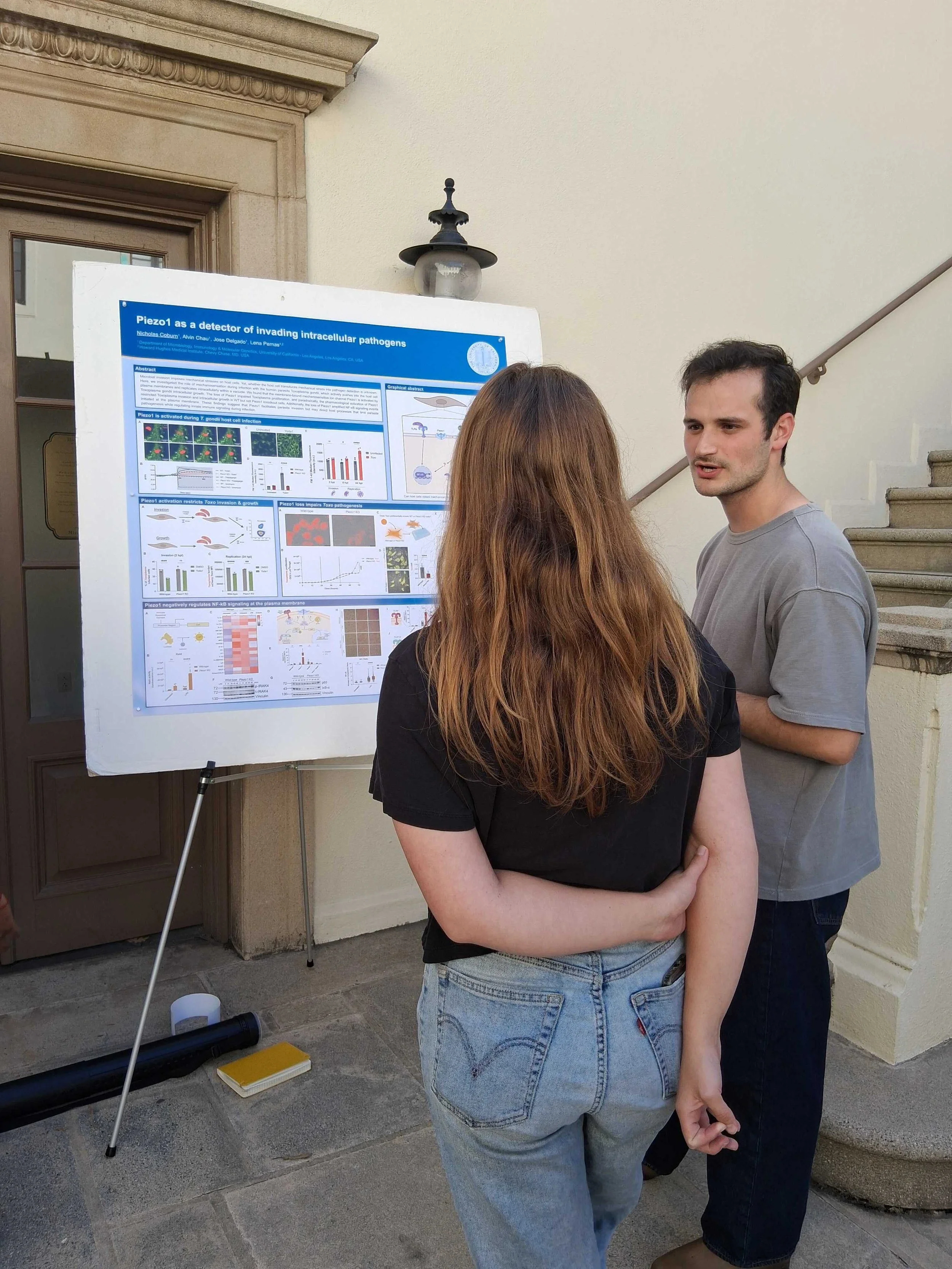
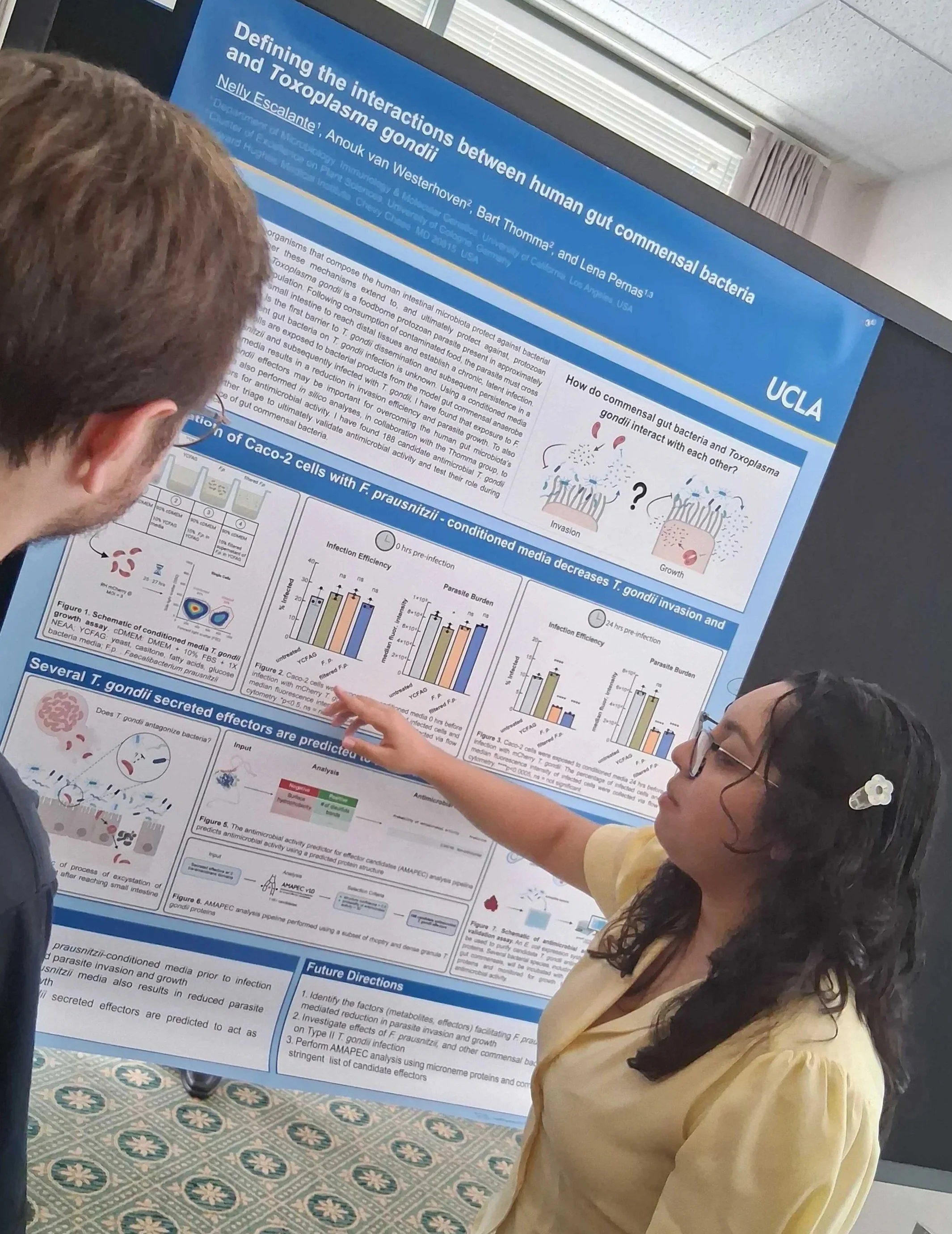
Congratulations to Sarah — Poster Award Winner at ABRCMS 2025!

We’re thrilled to announce that Sarah received a Poster Award at ABRCMS 2025 (Annual Biomedical Research Conference for Minority Students) that took place on November 19-22, 2025 in San Antonio, TEXAS. ABRCMS is one of the nation’s largest multidisciplinary undergraduate and graduate research conferences, dedicated to promoting diversity and excellence in the biomedical sciences. Learn more about the conference here: https://abrcms.org/

Sarah’s poster stood out among a competitive field of young scientists, showcasing her dedication, rigor, and creativity. This recognition reflects both her hard work and the strength of the research happening in the Pernas Lab.

Please join us in congratulating Sarah on this well-deserved honor — we couldn’t be more proud!

Melissa is the Cover Art Winner at the 15th Annual SCEP Symposium

We are pleased to share that Melissa was selected as the Cover Art winner for the 15th Annual Southern California Eukaryotic Pathogen (SCEP) Symposium - UC Riverside School of Medicine.

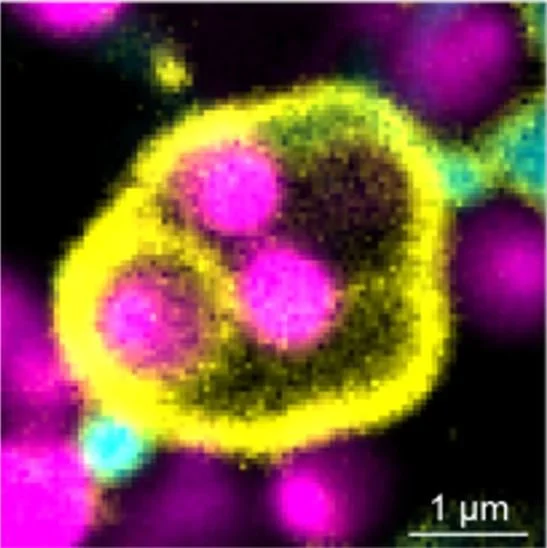
Melissa’s artwork, titled “Host mitochondrial cristae remodeling at the T. gondii parasitophorous vacuole membrane” (also playfully referred to as “STED for SCEP”), was chosen from among the symposium submissions to be featured on the cover for this year’s abstract booklet — a recognition of both scientific relevance and visual clarity. fliphtml5.com

Please join us in congratulating Melissa on this achievement and for helping to represent the scientific community at SCEP through her creative and insightful work.

🌟 Student Spotlight — Sarah Sun

We’re excited to celebrate Sarah Sun, a fourth-year Microbiology, Immunology, and Molecular Genetics major whose undergraduate research experience in the Pernas Lab was recently featured by the UCLA Undergraduate Research Center—Sciences!

Sarah joined our lab after transferring to UCLA and proactively reaching out to faculty, ultimately becoming part of our team in September 2024. Her research focuses on understanding host–pathogen interactions between host mitochondria and the parasite Toxoplasma gondii. In particular, Sarah is investigating a newly discovered mitochondrial structure known as SPOTs (Structures Positive for Outer Mitochondria Membrane) and how these structures interact with other host organelles like lysosomes.

Sarah reflects on her time in the lab as supportive and collaborative, highlighting the strong mentorship and the opportunities UCLA provides — from summer research programs to workshops on scientific communication and graduate school preparation — which have supported her development as a young scientist.

She’s currently preparing to present her work at her first scientific conference this November, drawing on URC resources to help refine her poster. Looking ahead, Sarah plans to continue her scientific journey and hopes to pursue a career in academia, with the long-term goal of running her own research lab.

Please join us in congratulating Sarah on her accomplishments and in celebrating her dedication to research and scientific growth! 🎉

Lena Featured in UCLA Newsroom: How Mitochondria Help Starve Pathogens

We’re excited to share that Lena was recently interviewed for a UCLA Newsroom feature highlighting new research on how host cell mitochondria help weaken intracellular infections.

In the article, Lena discusses emerging evidence that mitochondria are not just passive powerhouses during infection, but active participants in host defense. By altering metabolic outputs and resource availability inside infected cells, mitochondria can effectively starve invading pathogens, limiting their ability to replicate and spread.

The interview highlights how pathogens depend on host nutrients to survive—and how mitochondrial remodeling during infection can tip the balance in favor of the host. These insights are especially relevant for intracellular parasites and bacteria that hijack host metabolism as part of their life cycle.

Lena’s perspective in the piece emphasizes the growing appreciation of mitochondria as dynamic signaling and regulatory hubs during infection, with implications for understanding disease mechanisms and identifying new therapeutic strategies.

You can read the full article here:
👉 Scientists discover how cells use a secret weapon to fight off some pathogens — UCLA Newsroom

We’re proud to see Lena’s work and insights featured, and excited about what this research reveals about the intersection of metabolism, organelle biology, and host–pathogen interactions.